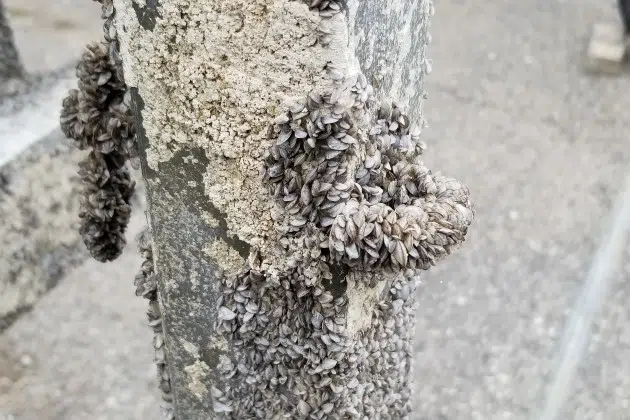
(KNSI) – A Pearl Lake property owner pulling a dock out for the season has led to the discovery of zebra mussels in the Stearns County lake.
The Minnesota Department of Natural Resources has now confirmed the invasive species in the lake south of Rockville. After the property owner called the DNR, an invasive species specialist checked a boat lift on the lake and found several more zebra mussels attached to it.
Zebra mussels are small, fingernail-sized shellfish with striped shells that latch onto almost any hard surface underwater, from rocks and plants to docks, pipes and boat lifts. A single mussel can filter about one quart of water a day while feeding mostly on algae, and beds of them can grow to tens of thousands in a single square yard.
That’s a concern for a lake like Pearl, which is already under pressure. The DNR describes it as a shallow lake with a heavily developed shoreline that is becoming more nutrient-rich, sees occasional summer algal blooms and has a growing amount of invasive curly-leaf pondweed. Clearer water from mussels filtering out algae may sound like a plus, but it lets sunlight reach deeper and can fuel more weed growth.
The mussels can also make the lake less pleasant to use. Their sharp shells can cut the feet of swimmers and pets, and they can clog and damage boat motors. Below the surface, they compete with young fish and other animals for food, and they attach to and kill native mussels.
Once they’re in, they’re likely there to stay. Efforts to control zebra mussels in open lakes and rivers are uncommon and considered experimental, though the DNR has allowed pilot treatment projects in public waters since 2015.
Lakes with confirmed invasive species are added to the DNR’s infested waters list, which changes how activities like bait harvest and water use are managed there. Pearl Lake joins a growing group; as of June 2025, the DNR had confirmed zebra mussels in 378 Minnesota lakes and wetlands. Zebra mussels were also found in 2022 in nearby Grand Lake, also south of Rockville.
Whether or not a lake has invasive species, Minnesota law requires boaters and lake users to clean boats, trailers and equipment of aquatic plants and prohibited invasive species, drain all water and leave drain plugs out during transport, and throw unwanted bait in the trash. Bait, plants and aquarium pets should never be released into Minnesota waters, and docks, lifts and rafts must dry for 21 days before being moved to another lake.
The DNR also recommends decontaminating boats and equipment at a free station, spraying them with high-pressure water (or rinsing with regular water if that’s not available) and letting them dry at least five days before using them in another lake.
A list of free decontamination stations is available by clicking here.
___
Copyright © 2026 Leighton Media. All rights reserved. This material may not be broadcast, published, redistributed, or rewritten, in any way without consent.





FOLLOW US FOR INSTANT UPDATES!


FOLLOW US FOR INSTANT UPDATES!