To listen to Forever 37: Shawna’s Story, click below.
(KNSI) — Today is National Fentanyl Awareness Day, an effort to spotlight the problem that has reached communities from urban to rural.
The Minnesota Department of Health explains fentanyl is a powerful synthetic opioid, up to 50 times stronger than heroin and 100 times stronger than morphine. It comes in two forms – prescription and illicitly manufactured. Illicitly-manufactured fentanyl, the MDH says, is driving much of the increase in overdoses seen in Minnesota and nationally in recent years.
Police say sometimes people don’t even know they’re taking it, and that’s why it is extremely dangerous.
The Drug Enforcement Administration issued a Public Safety Alert in November of 2022, warning that six out of ten fentanyl-laced fake prescription pills contain a potentially lethal dose of fentanyl.
St. Cloud is not immune to the opioid crisis. In 2022, St. Cloud police say a record was set for overdose-related deaths at 19. They believe 16 of those were because of fentanyl.
Behind every death is a family trying to figure out what to do and how to move on from such a tragedy.
Isaiah lost his mother, Shawna, to an accidental fentanyl overdose in June 2020. Isaiah said Shawna was “the best mother that I could have asked for. I think she was an amazing woman. She was so smart and outspoken. I just idolized her so much because she was so outgoing and always had friends and she was just awesome.”
The day Shawna died wasn’t just any regular day. It was Isaiah’s birthday.
Shawna’s mother, Julie, said her daughter loved life, loved her family, and was a doting aunt as she struggled with chronic neck pain. Shawna had dealt with spinal stenosis in her cervical spine for years and used prescribed pain management. Then Shawna’s dad died unexpectedly in 2015. “Even though she talked about it and seemed to grieve, it seemed that was probably a contributing factor to her using. And some things happened. It was tough there for a while.”
Shawna’s pain management turned into a substance use disorder.
“She lost everything, and she ended up choosing to go to treatment. She went to inpatient, outpatient, a halfway house, was on Suboxone for a while. [She] got everything taken care of, got her son back. Life was good.”
Then, in 2020, Shawna was seriously injured in a car accident, and in addition to her neck pain, she began to suffer from chronic migraines. Julie said Shawna would get nerve ablations at the doctor and go to therapy to ease the pain.
Then came the pandemic.
Shawna wasn’t working, care became less accessible, and “this may have been one of the reasons why she was reaching out for some other pills.”
As it was Isaiah’s birthday, a celebration was planned.
“She was in her apartment by herself,” Julie explained, and “she was putting perfume on. She was found with the bottle of perfume, on the floor, open, several hours later. She took what she thought was a Percocet, and it turned out to be a lot of fentanyl, and she, we believe, died instantly.”
Shawna was 37.
The Food and Drug Administration recently OKed sales of over the counter naloxone, better known as Narcan. Narcan can reverse the effects of an opioid overdose within just a few minutes.
Central Minnesota Violent Offender Task Force Commander Lucas Dingmann says he believes some of the 80 people who suffered from an opioid overdose last year would have survived if Narcan had been available sooner. “It surely could help save more lives if people have it in general because, if they’re not in a more metropolitan area, where law enforcement or emergency services are there quicker, this could help, and we want to make sure that we can get this information out to everybody for educational purposes so we don’t have overdose deaths anymore.”
Julie is 100 percent behind the measure and is one step ahead. “I have it in my vehicle. Isaiah has some. My other two daughters have some. It needs to be accessible. It’s a life-saving measure for people to have that chance to get help. It should be everywhere.”
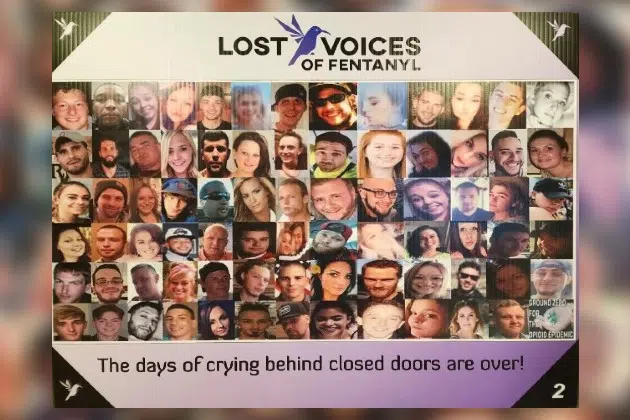
May 11th, at the Minnesota State Capitol, there is a Remember Our Loved Ones rally where Shawna’s picture and the photos of countless other mothers, brothers, sons and daughters lost to addiction and substance use disorders will be shown.
If you or someone you love is struggling with addiction, Isaiah says, “Your family is still there. Love them and hold them and don’t just shut them out.”
___
Copyright 2023 Leighton Enterprises, Inc. All rights reserved. This material may not be broadcast, published, redistributed, or rewritten, in any way without consent.




FOLLOW US FOR INSTANT UPDATES!


FOLLOW US FOR INSTANT UPDATES!