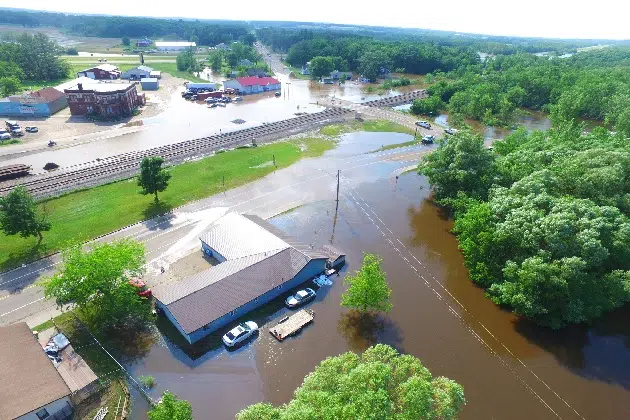
(KNSI) – Flooding is the focus on Wednesday as Minnesota’s Severe Weather Awareness Week continues, and the National Weather Service is urging residents to take the threat seriously, no matter where they live.
According to the National Weather Service, on a national level, floods claim dozens of lives each year, force roughly 300,000 people from their homes and cause more than $2 billion in property damage. In 2019, six of the nine state and federally declared disasters in Minnesota involved some form of flooding.
Twin Cities meteorologist Ryan Dunleavy told KNSI News one of the most dangerous behaviors tied to flood deaths is something that might surprise people: driving around road barricades. “That route may save you five minutes to your location, but you know, if it’s worth the detour to save your life, that’s definitely the probable way you should go. So, if you see a road flooded, turn around don’t drown, is what we really stress for flood safety.”
He said about 75% of flash flood deaths happen at night, and half of all flood-related deaths involve people in vehicles. Just six inches of water can cause a passenger car to lose control or stall. A foot of water can float many vehicles, and two feet of rushing water can sweep away SUVs and pickups.
Dunleavy said flash flooding, which occurs within six hours of heavy rainfall, is not limited to hilly terrain on the eastern side of the state. While topography plays a role in how quickly water collects, flat rural areas are not immune. “Prolonged heavy rainfall has kind of backed up some storm drainage areas, and it’s had some lower-lying areas of a part of towns flood. So it’s first it’s the streets, but then it actually starts seeping into the lower levels of people’s homes.”
In recent years, communities across central and southern Minnesota have dealt with significant flood events. Waseca County, Mankato and smaller towns like Randall have all seen road closures and property damage from excessive rainfall. Even the St. Cloud and Sartell areas have streets that are known to flood when storms produce enough rain.
The NWS said an active weather pattern is expected next week that could bring additional rainfall and cause some rivers to rise, though levels are not expected to reach flood stage.
The Weather Service also reminds residents to know the difference between a Flash Flood Watch, which means conditions are favorable for flash flooding, and a Flash Flood Warning, which means flash flooding is occurring or imminent.
___
Copyright © 2026 Leighton Media. All rights reserved. This material may not be broadcast, published, redistributed, or rewritten, in any way without consent.





FOLLOW US FOR INSTANT UPDATES!


FOLLOW US FOR INSTANT UPDATES!