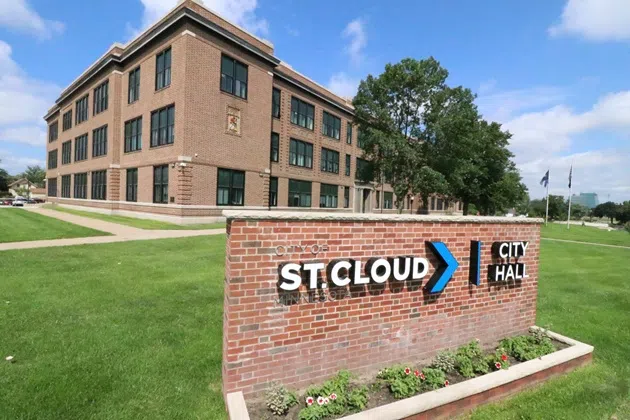
(KNSI) – St. Cloud’s rulebook does not say the words “data center,” and the city will take at least another month to fix that.
The St. Cloud Planning Commission voted 5 to 1 Tuesday night to postpone action on the city’s first data center rules, sending staff back for more research before a possible vote in October.
The delay matters because the current code is not silent by design. It never contemplated these buildings, so the city treats them as communications facilities, a use already allowed in its planned industrial parks. The door is technically open right now, with no standards attached to it.
Community Development Director Matt Glaesman said the rules are aimed at the enormous facilities turning up on the nightly news in other parts of the country. “But we have none of those here now. We have no proposals for them to be here. So this is really trying to be proactive.”
The draft splits data centers in two. Anything at hyper-scale, running to a million square feet and thousands of servers, would need a conditional use permit and its own public hearing, and could go only in the planned industrial districts. Smaller on-site operations would be allowed with nothing more than a building permit.
A hyper-scale building, along with its transformers and generators, would also have to sit 1,320 feet, a quarter mile, from the nearest home. Some commissioners floated up to a half mile.
Five people spoke at the public hearing. Four raised concerns about how much water and electricity the buildings use, and questioned whether communities will even need facilities this large down the road, since technology tends to get smaller and more efficient over time. The fifth, speaking for the building trades, urged the city to leave the door open, pointing to construction jobs and the economic boost a project would bring.
Commissioners said they want that side of the ledger filled in too, asking staff to come back with what a data center could actually mean for city coffers, including tax revenue and any incentives involved.
Glaesman said part of what comes back next month is ordinance language, including limits on how long backup generators and batteries can run. The rest is homework. “What’s the sound and vibration transmission of our soil types in St. Cloud? That’s probably not in an ordinance in the end, but it becomes something that might help them make a decision.”
Commissioner Charlie Hobbs tried to push the delay to December. That amendment failed 1 to 5, with Hobbs the lone yes. A motion to wait until November died for lack of a second.
The commission has closed its public hearing, but Glaesman said written comments to the Community Development office will go into the packets for both the commission and the St. Cloud City Council, which holds its own hearing before anything takes effect.
___
Copyright © 2026 Leighton Media. All rights reserved. This material may not be broadcast, published, redistributed, or rewritten, in any way without consent.



FOLLOW US FOR INSTANT UPDATES!


FOLLOW US FOR INSTANT UPDATES!