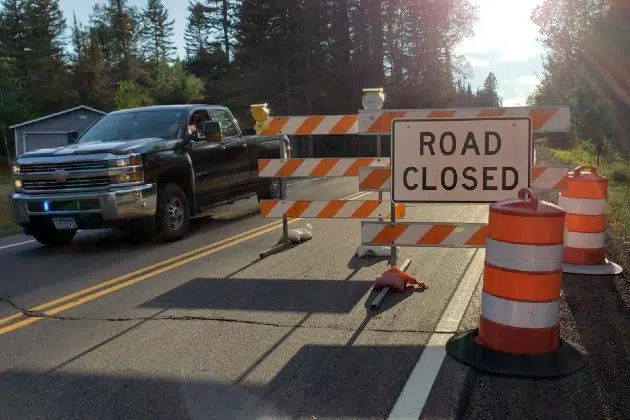
(KNSI) — For just the third time in its history, the Boundary Waters Canoe Area Wilderness is closed until further notice.
Nearly two dozen wildfires are burning across the Superior National Forest, including within the Boundary Waters, and officials say unusually hot, dry, and windy weather is causing them to spread fast and burn unpredictably.
The closure covers about 1,900 campsites across the million-acre wilderness, and U.S. Forest Service staff are working to notify campers. The agency says the BWCAW is too large and too remote to safely locate and escort every visitor, so officials are urging anyone still in the wilderness to leave immediately. In a press release, the Forest Service explains wildfires don’t just threaten trees and campsites. They create dangerous smoke, unstable conditions, and rapidly shifting fire behavior that can trap visitors with little warning. Even healthy adults can experience breathing problems when smoke levels rise, and people with heart or lung conditions can be especially vulnerable. In a wilderness as large and remote as the Boundary Waters, emergency response is challenging even on a normal day. Those risks increase significantly as wildfires spread.
All permits through Friday have been canceled, and refunds have been processed automatically. The Forest Service says it has contacted cooperators and permit holders and is directing anyone who booked through a cooperator to reach out to discuss options. Permits in other areas of the Superior National Forest remain available.
Full suppression tactics are being used on all fires, though many are difficult to reach safely. Fire danger is expected to remain high through the end of July.
An Air Quality Alert has been issued for northeastern Minnesota through at least Thursday morning as the Air Quality Index in Cook, Lake, and St. Louis counties is expected to reach the purple, or very unhealthy, category. Sensitive groups, such as people with lung disease including asthma, those with heart disease, children, and older adults, should avoid all physical activities outdoors. The general public should avoid prolonged or heavy exertion. The Minnesota Pollution Control Agency recommends reducing or eliminating activities that contribute to air pollution, such as outdoor burning and the use of residential wood burning devices. Reduce vehicle trips and vehicle idling as much as possible. Keep windows closed overnight to prevent smoke from getting indoors.
The closure will remain in effect until fires are contained and the risk to the public has decreased. The Forest Service says the BWCAW draws more than 150,000 visitors a year and is asking the public to stay out of the area.
___
Copyright © 2026 Leighton Media. All rights reserved.




FOLLOW US FOR INSTANT UPDATES!


FOLLOW US FOR INSTANT UPDATES!