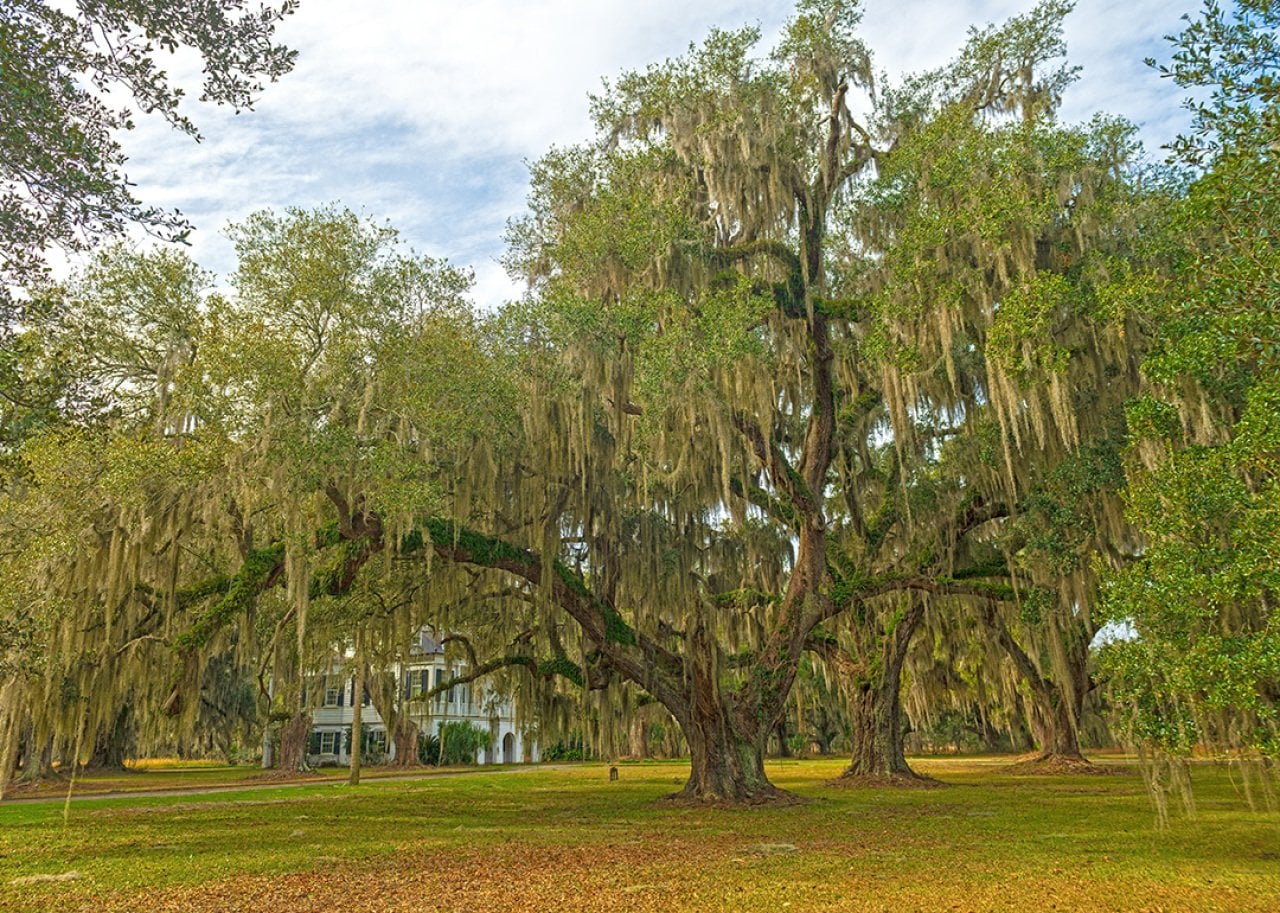
Witness trees: A living archive of Black memory
On the island of St. Croix, the largest of the U.S. Virgin Islands, a nearly 300-year-old baobab tree stands firmly in the center of a grass field. Its 50-foot-wide, swollen trunk and winnowy branches are a spectacle among an otherwise ordinary backdrop. Onlookers say it looks as though the tree was planted upside down. That’s why it’s been nicknamed the “Walking Tree,” drawn from an ancient legend that God inverted it to keep it from wandering.
Native to Africa, the baobab is not meant to grow here. How it arrived in the Caribbean around 1750 has long been the subject of speculation. But for many islanders, the answer is clear: by way of the transatlantic slave voyage, or Middle Passage. “The enslaved people [brought] the seed in their hair, necklaces, and earrings,” said Olasee Davis, a Caribbean ecologist and historian. “That is how the seed came to this part of the world.”