(KNSI) – In roughly two to three weeks, cardinals will cloister inside the Vatican to determine the successor to Pope Francis in a process known as the Papal Conclave.
Father Tom Knoblach says the 135 members will be more diverse than any other in history. “Pope Francis has created about two-thirds of those cardinals, and one of the features of his pontificate was broadening the global footprint of the places where cardinals come from. So it’s a more global approach.”
Francis held Catholicism’s highest post for over 12 years, where he was able to mold the church through a reform agenda. Knoblach says the transition between popes highlights the institution as a mixture of human and spiritual elements. He notes how the politics of the Papal Conclave are resolved often brings about surprising results.
The conclave should happen sometime in early-to-mid-May. Technically, any man who has been baptized is eligible, but the pick almost always comes from among the cardinals making the decision.
Knoblach explains why that makes sense. “You need both that divine guidance, but also the human qualifications, experience, wisdom, balance of personality, and outlook to successfully fulfill that role.”
The next pope will need to win over two-thirds of the electors. Knoblach says votes tend to happen twice a day, while meetings, presentations, and persuasion fill the rest of the time.
Black smoke will billow from the Sistine Chapel on an unsuccessful vote. White smoke rises when the selection is made. The conclave that elected Pope John Paul II in 1978 lasted for three days. For Benedict XVI, it was two days. Francis was picked in barely 24 hours. There is no set time period for how long it takes the conclave to choose.
Most popes have hailed from Europe. The pope also serves as the Bishop of Rome, so for many years it was tradition that the pope was Italian to honor his dual roles. Roman Catholic doctrine believes the pope is a successor to St. Peter. It interprets Matthew 16:18 as Jesus telling the apostle, “You are Peter, and upon this rock I will build my church.”
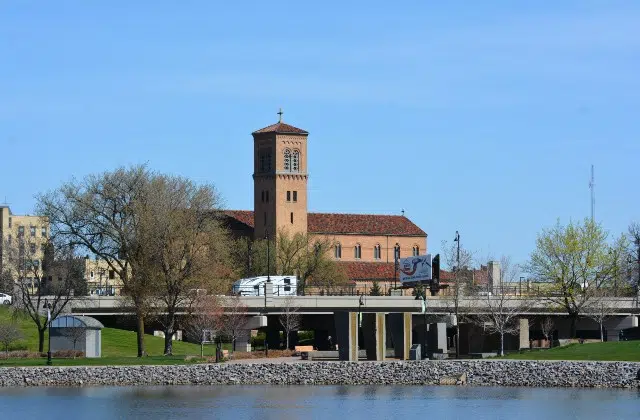
It is an enduring human institution that existed well before most monarchies, and that lineage will add a new member just weeks from now. The local church will play a role in guiding area Catholics through the transition. A mass is scheduled for Tuesday at 12:05 p.m. at the Cathedral to prayer for comfort in the wake of the pope’s death and offer intentions for the cardinals as they position the church for a new era.
Knoblach says he will remember Pope Francis for the dignity that he showed every person and the lesson “that we are all brothers and sisters in the human family. The concern that we would have for the marginalized and the least, those who do not have a voice, who do not have power in the world. Really, his heart was to go back to the message of the Gospel of Jesus Christ at the beginning, and to be that kind of presence of mercy and compassion and hope in our increasingly complex world.”
President Donald Trump has proclaimed that all flags in the U.S. should fly at half-staff to commemorate the death of Pope Francis. Trump plans to attend the funeral. When a pope dies, three events must occur in sequence. The first is for a formal pronouncement of death made in the pope’s personal chapel. The body is dressed in red vestments, miter, and scarf and presented to the public for viewing at St. Peter’s Basilica.
The cardinals close the coffin the night before the funeral. After the service, the burial will take place. Francis has chosen to be laid to rest at St. Mary Major Basilica, across town from the Vatican.
___
Copyright 2025 Leighton Media. All rights reserved. This material may not be broadcast, published, redistributed, or rewritten, in any way without consent.


FOLLOW US FOR INSTANT UPDATES!


FOLLOW US FOR INSTANT UPDATES!