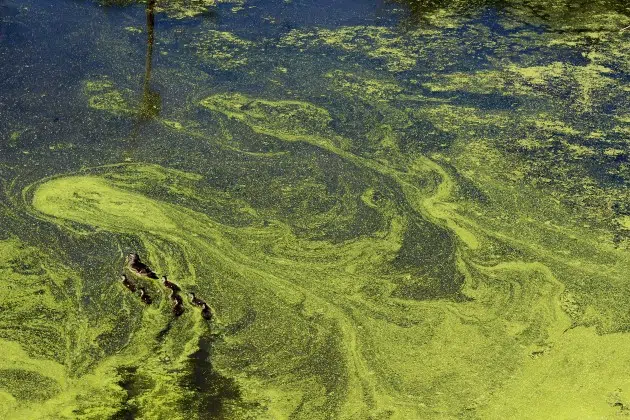
(KNSI) — Hot, calm weather is creating ideal conditions for blue-green algae growth in Minnesota lakes, and health officials are urging caution.
Despite the name, blue-green algae aren’t actually algae. They’re a type of bacteria called cyanobacteria, and they’re normally present in Minnesota waters. The bacteria thrive in warm, nutrient-rich water and can multiply quickly when conditions are right, especially once water temperatures climb above 75 degrees.
Algal blooms form when lakes have excess nutrients, particularly phosphorus and nitrogen, often from fertilizer, yard waste and runoff from cities, farmland and feedlots. They can appear as thick mats that look like green paint, pea soup or floating scum, though not every bloom is large or dense. Some cover only small parts of a lake with little visible algae, and blooms can also give off a swampy smell. Blue-green algae can’t be eliminated from a lake entirely, but reducing nutrient runoff is considered the best long-term way to limit how often and how intensely blooms happen.
People can get sick by swallowing lake water containing toxic algae, touching it, or inhaling water droplets while swimming, boating, waterskiing, tubing, or showering in contaminated water. Symptoms are usually mild and can include vomiting, diarrhea, rash, eye irritation, cough, sore throat, and headache, typically appearing hours to two days after exposure. Anyone who comes into contact with algae should rinse off with clean water right away.
Toxins from algae can also build up in fish. Fish caught in areas with active blooms are generally considered safe to eat, provided the guts are discarded, but experts suggest waiting a week or two after a bloom clears before eating fish from that water.
Dogs face a much greater risk than people. They’re more likely to wade into algae-covered water, swallow it while swimming and then ingest more by licking their fur afterward. Animals can show symptoms within minutes of exposure, including vomiting, diarrhea, rash, difficulty breathing, weakness, liver failure and seizures. Pet owners are urged to seek veterinary care right away if a dog shows symptoms after visiting a lake, and to rinse pets with fresh water immediately after swimming in water that could contain algae.
Possible human or animal illness can be reported to the Minnesota Department of Health’s Foodborne and Waterborne Illness Hotline at 1-877-366-3455. Health care providers and veterinarians can report suspected or diagnosed cases directly to MDH at 651-201-5414.
Large or dense blooms can be reported through the bloomWatch app. Anyone who sees multiple dead fish in a lake or river, or runoff or a spill entering state waters, should call the Minnesota Duty Officer at 1-800-422-0798, a line staffed 24 hours a day. Call 911 first if there’s an immediate threat to life or property.
___
Copyright © 2026 Leighton Media. All rights reserved. This material may not be broadcast, published, redistributed, or rewritten, in any way without consent.




FOLLOW US FOR INSTANT UPDATES!


FOLLOW US FOR INSTANT UPDATES!