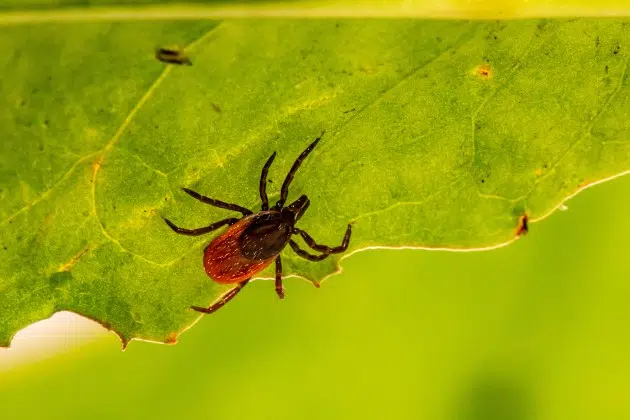
It might feel like a chore, but Minnesotans are encouraged to put on extra layers and use the proper insect repellent when going near wooded areas. Experts said it has been a bad summer for tick exposure.
The Midwest is one of the top regions for emergency room visits for tick bites, and Minnesota is no exception, according to the Centers for Disease Control and Prevention.
Jon Oliver, associate professor in the School of Public Health at the University of Minnesota, said because the state has recovered from a prolonged drought, conditions are ripe for ticks to repopulate.
“When we’re talking about deer ticks especially, in Minnesota they’re mainly limited to forested habitats, and those habitats retain the kind of high levels of moisture and humidity that they need to thrive,” Oliver explained.
Oliver pointed out deer ticks are commonly known for spreading Lyme disease, which can cause a fever, headache, fatigue and a distinct skin rash. If left untreated, the infection can spread to joints, the heart and the nervous system.
Oliver stressed it is important to remove the insect within 24 hours to avoid an infection. The Minnesota Department of Natural Resources offers prevention and removal tips on its website.
Dr. Joydip Roy, chief medical officer for UnitedHealthcare of the Mid-Atlantic, said beyond ticks, it is a good time to enhance protections from West Nile virus, which comes from mosquito bites. A common trick is reducing standing water outside your home, and Roy noted there are other preventive measures to consider.
“Repairing windows or screens to prevent insects from getting in and mosquitoes from getting in is also important,” Roy emphasized.
As for deer tick population trends, Oliver noted they are no longer exclusive to Minnesota’s eastern half. Over the past few decades, they have spread further west across the region.
“We’ve been seeing higher densities of ticks in places that they have colonized and the proportion of ticks infected with diseases, especially Lyme disease, has been increasing over time,” Oliver reported.
Oliver added milder winters in some regions are likely contributing to the tick population fanning out.



FOLLOW US FOR INSTANT UPDATES!


FOLLOW US FOR INSTANT UPDATES!