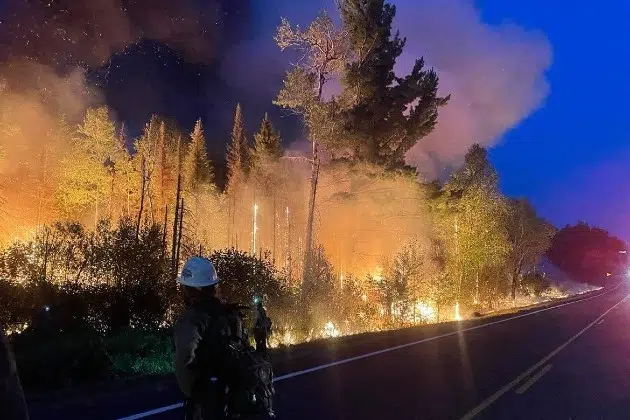
The Minnesota Department of Natural Resources issued red flag warnings for dozens of counties this week, with peak wildfire season well underway.
Scientists are also looking at what the future holds for these fires under a changing climate. During the past few summers, the smoky air from Canada blowing into Minnesota was undeniable.
However, the University of Minnesota Climate Adaptation Partnership has said it’s not just what’s happening in the air. Applied climate scientist Sam Potter at the center said research indicates that in the coming decades, the state is likely to see more risk days of wildfires starting on the ground. He said so many things go into it, including more extreme droughts connected to climate change.
“Drought stresses trees, leaving them more vulnerable,” he said, “and it means that fires can burn hotter and faster and be harder to put out.”
Potter said there’s a distinction between elevated risk and fires actually starting, noting that humans are largely responsible for igniting them, whether by accident or on purpose. He said there’s progress in mitigating this threat, pointing to more prescribed burns in areas such as northeastern Minnesota to get rid of dead or decaying trees.
Potter said planning can happen on an individual level, too. Just like a tornado, he said, residents can gain knowledge on how to protect themselves if a wildfire ever comes near their neighborhood.
“That really both helps you out personally,” he said, “but also helps out the first responders and the firefighters.”
Potter explained that some high-risk communities are setting examples for wildfire adaptation, such as making sure buildings aren’t too close to embers that can fuel destructive flames. He added that when doing a home improvement project, it’s worth considering building materials that are more fire-resistant.


FOLLOW US FOR INSTANT UPDATES!


FOLLOW US FOR INSTANT UPDATES!