How the unprecedented redistricting war is affecting election officials, politicians, and voters
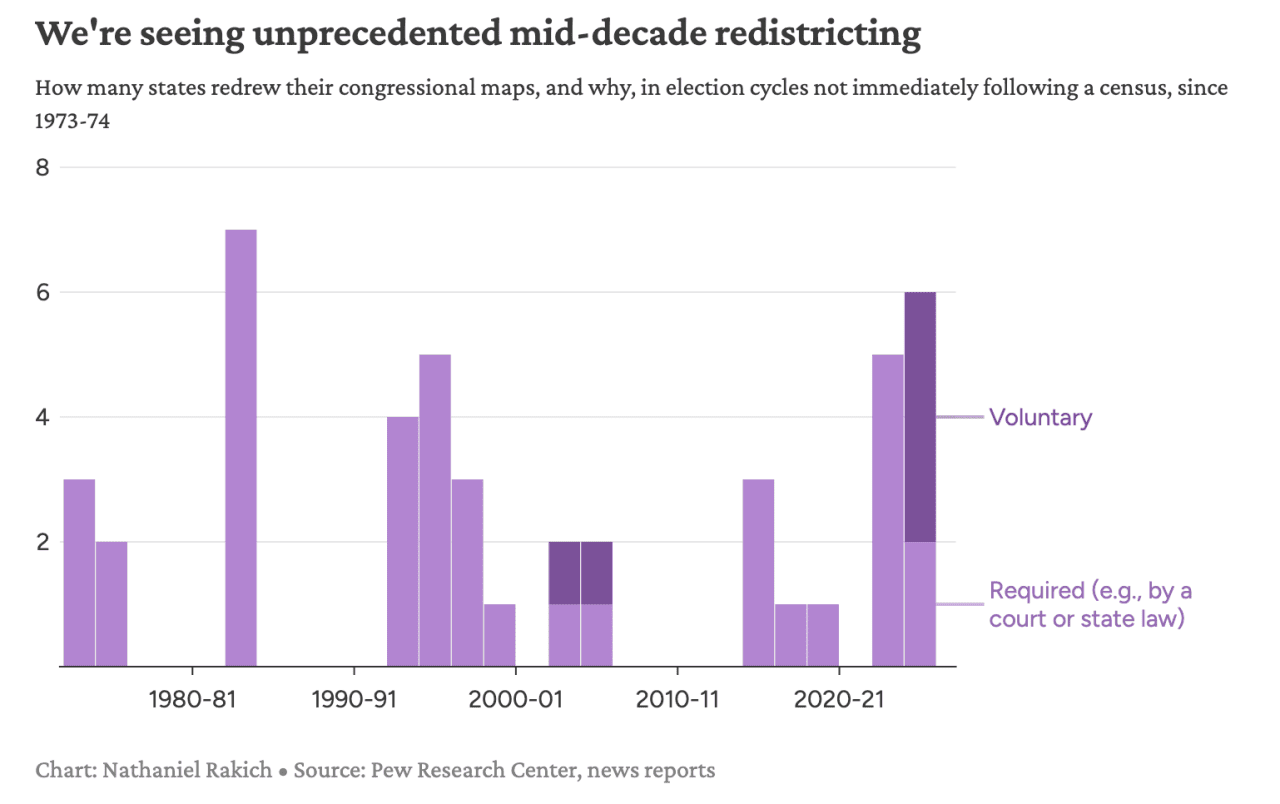
The redrawing of states’ congressional districts typically happens only once per decade, following the release of new Census data. But the U.S. is now up to six states that have enacted new congressional maps for the 2026 midterms; that’s more than in any election cycle not immediately following a census since 1983-84, Votebeat reports. Even more are expected to join the fray before voters head to the polls next year. Ultimately, more than a third of districts nationwide could be redrawn, threatening to confuse and disenfranchise voters.
The truly unusual thing, though, is that four of those states passed new maps totally voluntarily. Texas, Missouri, and North Carolina all redrew their districts after President Donald Trump urged them to create more safe seats for Republicans to help the GOP maintain control of the House of Representatives next year, and California did so in order to push back against Trump and create more safe seats for Democrats. (The other two states redrew for more anodyne reasons: Utah’s old map was thrown out in court, and Ohio’s was always set to expire after the 2024 election.) To put that in perspective, only two states voluntarily redistricted in total in the 52 years from 1973 to 2024, according to the Pew Research Center.