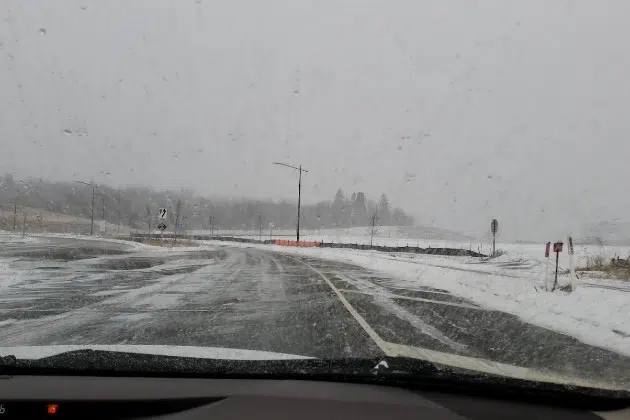
(KNSI) – Winter Hazard Awareness Week ends Friday with a focus on winter driving.
Warning Coordination Meteorologist Todd Krause with the National Weather Service recommends people pay attention to the one part of their vehicle that actually touches the road, and is tasked with navigating through the snow and ice.
He says, “One of the big things, of course, is making sure you’ve got good tires. If your tires are on their last legs, make sure those tires are in good shape, because those are absolutely critical for being able to stop and start, maintain control.”
Drivers should give themselves extra time to make it to their destination. Leave the house earlier than you would in summertime, as road conditions will likely require slower speeds than if the pavement were bare. Build in extra distance for stopping and drop back further behind the vehicle in front of you.
Another thing to keep in mind is being prepared for the possibility of becoming stranded on the side of the road. Krause asks drivers to have an emergency kit on hand in their vehicle, packed with a flashlight, cell phone battery charger, food, blanket, and other items that could help keep a person safe until help arrives. He also suggests not relying on technology alone to help others locate the vehicle.
He warns, “The cell phone may not always perfectly tell you exactly where you are, so being aware of your location is also important.”
Whiteout conditions are more likely in rural parts of central Minnesota, where cell service is less precise. The more isolated the location, the longer the response time. Being unable to give an accurate description of where the accident or emergency happened will only slow things further.
___
Copyright 2025 Leighton Media. All rights reserved. This material may not be broadcast, published, redistributed, or rewritten, in any way without consent.






FOLLOW US FOR INSTANT UPDATES!


FOLLOW US FOR INSTANT UPDATES!