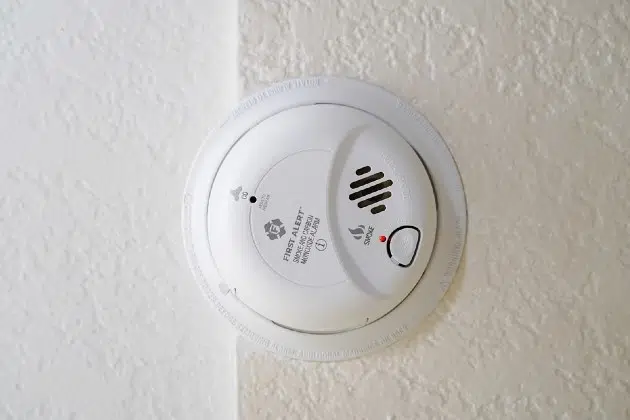
(KNSI) – Indoor air quality is Thursday’s theme for Winter Hazard Awareness Week, looking at a silent killer.
St. Cloud Fire Marshal Brian Kiffmeyer says carbon monoxide can’t be detected by humans on our own. We need help. “It’s invisible. It’s silent and deadly, so the only warning we’re going to get is a working CO alarm.”
Carbon monoxide is generated whenever fossil fuels are burned to power our modern appliances, especially furnaces. In winter, with the house closed up tight to keep out the cold, gas is most likely to build to unsafe levels.
Carbon monoxide alarms function much like fire alarms. If they sound, Kiffmeyer advises those inside to immediately leave the building and call the fire department to confirm the alarm or give the okay to return inside if it is a false signal.
There is another factor that makes trying to detect unsafe levels of carbon monoxide on one’s own nearly impossible. Symptoms of gradual, long-term overexposure often mimic the flu or a cold. Kiffmeyer notes there is one potential giveaway that a headache or feeling of nausea is something more.
He says, “However, one indication that it might be CO would be if everybody in your house has the same symptoms, and they start at around the same time. We should suspect CO at that point.”
Kiffmeyer explains CO poisoning is responsible for an average of about 14 deaths and 300 visits to the emergency room each year. They tend to spike during power outages, as people turn to generators and space heaters in a pinch.
Another situation to monitor is after a heavy snow or ice storm. “It’s really important, maybe even once a week, to do a walk around outside of your house in the winter when it’s really snowy and cold, just to make sure there isn’t any snow or ice buildup on those exhaust ports for your appliances inside.”
If the ports are covered, proper ventilation is not possible, and the CO is redirected back into the home.
Kiffmeyer says the local Red Cross chapter runs a program that provides free CO alarms to those who need them. They’ll also provide installation.
Carbon monoxide is the most common indoor problem in winter. Other ones to protect against include radon, mold, and asbestos.
___
Copyright 2025 Leighton Media. All rights reserved. This material may not be broadcast, published, redistributed, or rewritten, in any way without consent.



FOLLOW US FOR INSTANT UPDATES!


FOLLOW US FOR INSTANT UPDATES!