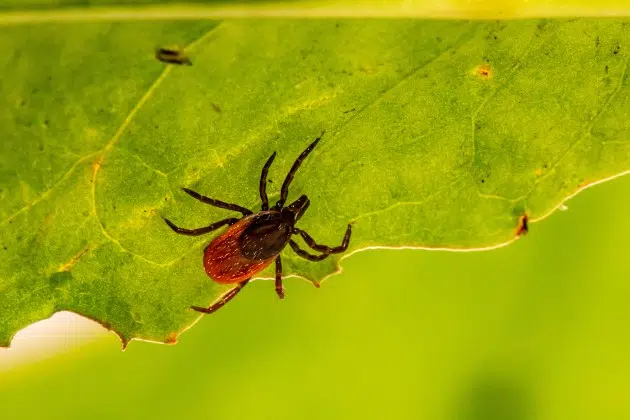
(KNSI) – Deer ticks tend to be most active in late April and early May, particularly those likely to transmit Lyme disease.
In northern states, a tick’s life cycle is two years long. University of Minnesota Associate Professor Jon Oliver explains the larval stage. “The eggs are laid in the spring, and then those hatch out into larval ticks, which are really, really tiny. They don’t really bite humans or transmit disease to humans. They feed on mice.”
Lyme disease naturally passes between mice and larvae. Engorged, they go dormant under rocks or leaf litter for the winter and emerge as nymphs in the spring of year two. Another bite is needed to mature into adults, and nymphs often choose humans.
Just two decades ago, seeing a deer tick in St. Cloud would have been rare. Oliver says the species is incredibly versatile, but there are still limits to where it can thrive. They need parks or wetlands with plenty of plants and shade. “Ticks can’t drink water. They don’t slurp up a droplet of water. Instead, they actually secrete salts onto their mouth parts, and those salts absorb atmospheric water. They really need to be in areas with a high enough humidity level.”
Forests and state parks would definitely fit the bill. Last year saw seasonable temps and lots of rain for the larvae, meaning the nymph ticks will be prevalent in 2025.
For those planning time in the Great Outdoors, there are some steps you can take to keep them off. The first is to use bug spray. Ticks are like mosquitoes in that they would prefer to stay away from DEET. Oliver has some other tips to get through a hike or camping trip unscathed. “If you’re somewhere where you really do know that there’s ticks about, you can even go so far as to tuck your pant legs into your socks. That helps keep the ticks on the outside of your pants rather than going up the inside of your pants. And so that way they’re easier to spot.”
He also recommends light clothing as it will be easier to find ticks before they latch onto you. Oliver reminds people they have 24 hours to remove a tick before they are at risk for Lyme disease.
___
Copyright 2025 Leighton Media. All rights reserved. This material may not be broadcast, published, redistributed, or rewritten, in any way without consent.





FOLLOW US FOR INSTANT UPDATES!


FOLLOW US FOR INSTANT UPDATES!